Presents
Karel Bendl
String Quartet in F Major, Op.119
Karel Bendl's String Quartet in F Major dates from 1895 and was dedicated to the famous Bohemian String Quartet. In four movements, it opens with an beautiful and gentle Andante con moto introduction reminiscent of a sunrise--a Czech sunrise because already we hear the music of the Bohemian forests. The main theme to the following movement, Allegro moderato, (our soundbite starts here) is based on the introduction and is so pregnant with possibilities that it births all of the other themes to this gorgeous movement. Next comes a very lively and fresh, dance-like scherzo, Quasi presto. The trio section takes the form of a striking recitative in which the cello leads and viola responds. A big slow movement, marked Adagio non tanto follows. Then, it slows further to Adagio assai as Bendl produces an impressive requiem section. This funereal music never fails to make a very deep impression on those hearing it. The finale, Con fuoco, lives up to its title. Full of Bohemian fire, the opening theme races recklessly along carrying all before it. A more relaxed and lyrical middle section allows the players and listeners to catch their breath, before the return of the main theme which blazes forward to a powerful conclusion. There is no point in mincing words---this is an unquestionable masterpiece--- as fine as any of the quartets of Dvorak or Smetana. And though, like their works, it is full of wonderful Bohemian melodies, it must be emphasized that it is not an imitation but is fresh-sounding and original. Bendl speaks with his own voice.
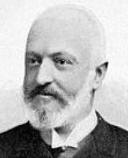
Karel Bendl (1838-1897) was born in Prague and spent most of his life there. He was educated at the Prague Organ School where he met and befriended Dvorak one year before graduating with honors in 1858. After working in Prague for some years, primarily composing vocal works, Bendl was engaged in 1864 as a conductor and choir director in Brussels, then Amsterdam and finally Paris. In Paris, he became influenced by the stage works of Charles Gounod and Ambrose Thomas (whose quartet we have republished), and especially by Giacomo Meyerbeer. By 1867 he was back in Prague and succeeded Smetana as conductor of an important Prague choral society. At this time, Bendl continued to compose a large number of vocal works which primarily showed the strong influence of Mendelssohn. Eventually, however, he was drawn to the stage and spent nearly the rest of his life composing for the Czech opera. Many of his operas achieved considerable success in Bohemia but like most Czech operas, including those of Dvorak, they were ignored by the all-important German opera world. Unlike Dvorak, Bendl, for the most part, shunned writing purely instrumental works and therefore was unable, as Dvorak had been, to attract a supporter like Brahms, without whom Dvorak would perhaps be as little known as Bendl. Except for three sonatas and the Op.119 quartet, Bendl wrote no chamber music. And he waited until near the end of his life to do it---a tremendous pity when one considers the high quality of this very fine work. For the first two decades after its composition, Op.119 was regular fare on Czech and even German concert programs, but then, like so many other fine works, it disappeared without a trace.
Parts: $24.95