Presents
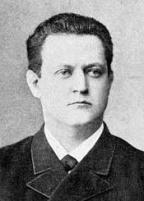
Alexander Kopylov
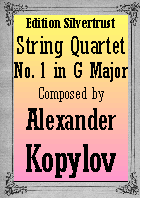
String Quartet No.1 in G Major, Op.15
Although Alexander Kopylov (1854-1911) began his studies at the Imperial Court Choir which was similar and modeled after the more famous one in Vienna. (Today known as the Vienna Boys Choir). There he studied violin and served as a chorister. Later, he taught there for much of his life. Although he was unable to gain entrance to either of the major Conservatories in Russia, he nevertheless was able to study composition privately with Rimsky-Korsakov and Anatoly Liadov. He gained a reputation as a Symphonist, and composer of songs, but through his friendship with Rimsky Korsakov, he became interested in chamber music, writing four string quartets. Of them Wilhelm Altmann, the famous chamber music scholar and critic, writes in his Handbook for String Quartet Players:
Kopylov's four carefully written string quartets show an outstanding command of proper quartet style. He gives all of the instruments mutually rich parts to play, alternating in exquisite fashion. His excellence is particularly strong in the sparkling themes. He is able to combine the external beauty of form with effective ideas and distinctive harmonies and rhythms.
String Quartet No.1 dates from 1890 and shows the influence of Rimsky-Korsakov's teaching in that the music is clearly of the Russian nationalist school. From start to finish, this is a very Russian sounding work, quintessentially Russian. The Moderato introduction to the first movement, Allegro, opens with a richly tonal melody right out of the Russian Orthodox liturgy. The themes to the Allegro, however, are brighter, alternating between forward drive and playfulness. The second movement begins Presto, but this is merely an introduction to the Allegretto which follows. It is an elves dance. The stunning third movement, Andante, is reminiscent of the famous slow movement to Borodin's Second Quartet but dare we say it, better yet--extraordinary beauty and power combined. The finale, Allegro, has it all, from lively and bright Russian sailor dances to funereal dirges. An outstanding quartet by any measure. Of no great technical difficulty, this work will surely be an audience pleaser.
Parts: $24.95

Parts & Score: $31.95